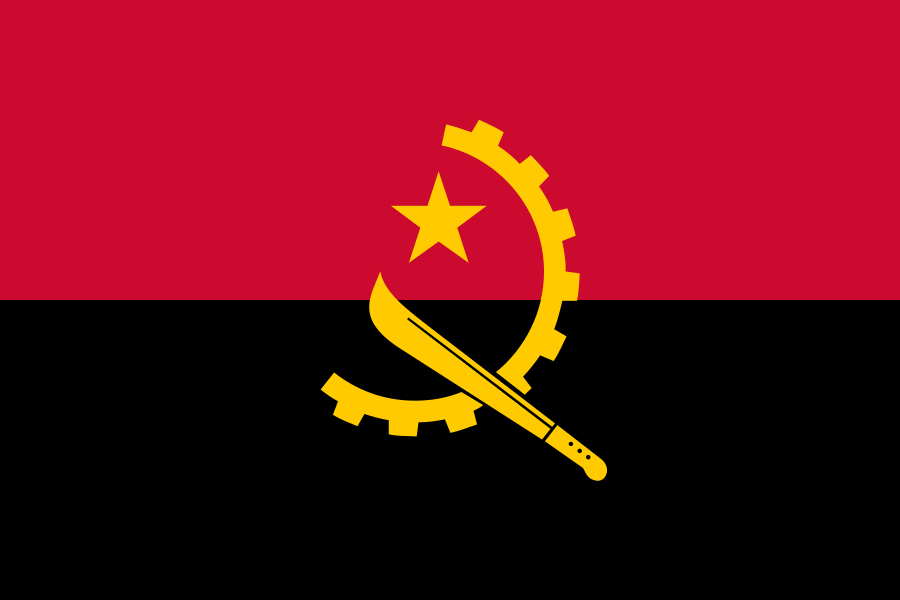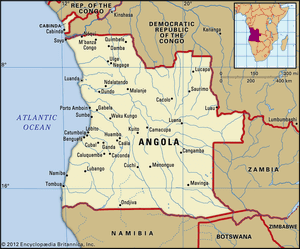
Angola is located on the western coast of Southern Africa. It is bordered by the Democratic Republic of the Congo to the north and northeast, Zambia to the east, Namibia to the south, and the Atlantic Ocean to the west. The small, oil-rich exclave of Cabinda is separated from the rest of the country by a strip of territory belonging to the Democratic Republic of the Congo. Angola’s geography features a narrow coastal plain that rises into a vast inland plateau (planalto) and rugged mountain ranges.
People & Culture
Angola’s population is made up of several major Bantu ethnic groups, including the Ovimbundu, Ambundu, and Bakongo. Portuguese is the official language and is widely spoken across the country, alongside indigenous national languages such as Umbundu, Kimbundu, and Kikongo.
Angolan culture is known for its rich musical and dance heritage, which includes traditional styles as well as modern genres like kizomba and semba. Christianity is the primary religion, practiced by the majority of the population. The local cuisine centers around staples such as cassava, corn, fish, and chicken, with popular traditional dishes including funge (a cassava or cornmeal porridge) and muamba de galinha (a chicken stew made with palm oil).
Nature
The natural landscape varies from tropical rainforests in Cabinda and savannahs in the north and central plateaus to the arid Namib Desert in the southwest. High elevations on the central plateau produce a milder, temperate climate compared to the humid coastal areas.
Wildlife: Angola is home to diverse African wildlife, including elephants, lions, leopards, antelopes, and hippos, protected within national parks such as Kissama National Park. The country is also famous for the Giant Sable Antelope (palanca negra gigante), an endangered subspecies endemic to Angola and a national symbol.
Rivers & Waterways: Major rivers flow through Angola, including the Kwanza, the Cubango, and the Zambezi. The Kalandula Falls on the Lucala River are among the largest waterfalls by volume in Africa.
Government
Angola is a presidential republic. The President serves as both the head of state and head of government, exercising broad executive powers. Legislative power is vested in the unicameral National Assembly (Assembleia Nacional). The constitution allows the leader of the political party winning the most seats in a national parliamentary election to assume the presidency.
History
The islands were originally inhabited by indigenous peoples, including the Arawaks and later the Caribs. Christopher Columbus sighted the islands in 1493, naming Antigua after a shrine in Spain. The British colonized Antigua in 1632 and Barbuda in 1685, establishing vast sugarcane plantations that relied heavily on the labor of enslaved Africans.
Slavery was abolished across the British Empire in 1834, though the sugar-based economy remained dominant for decades. During the 20th century, labor movements gained strength, pushing for political rights and economic independence. The country achieved self-government in 1967 and officially gained full independence from the United Kingdom on November 1, 1981. Since independence, the nation has developed a modern economy heavily focused on international tourism and financial services.