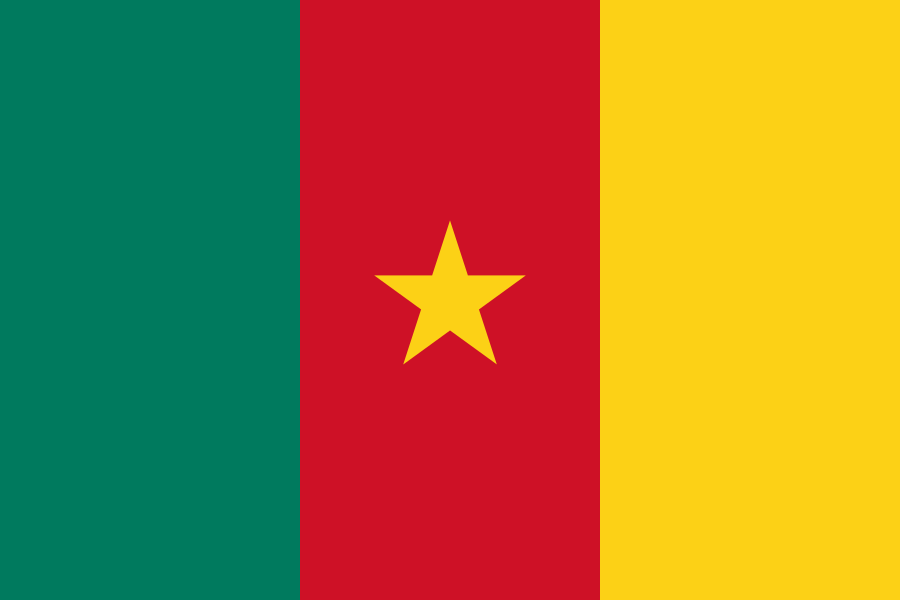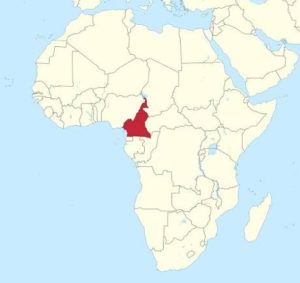
A country in West and Central Africa, often described as “Africa in miniature” because it encompasses nearly all of the continent’s major climates, landscapes, and cultures within its borders. Located at the junction of West and Central Africa, Cameroon stretches from the Atlantic coast and dense equatorial rainforests in the south to the Sahelian savannas and the shores of Lake Chad in the north. With over 240 ethnic groups and more than 230 languages, it is one of the most culturally diverse nations on the continent. Since independence, it has maintained relative political stability, though its English-speaking regions have experienced ongoing tensions.
The territory has been inhabited for thousands of years, with the Baka (Pygmy) peoples among the earliest inhabitants of the southern forests. By the first millennium CE, the Sao civilization flourished around Lake Chad, known for its terracotta art. The Kanem-Bornu Empire later dominated the Lake Chad basin from the 9th century. In 1472, Portuguese explorer Fernão do Pó reached the coast and named the Wouri estuary “Rio dos Camarões” (River of Shrimps), which gave the country its name. In 1884, Germany established the colony of Kamerun. After World War I, the territory was divided between France (80%) and Britain (20%) as League of Nations mandates. French Cameroun gained independence on January 1, 1960, becoming the Republic of Cameroon under President Ahmadou Ahidjo. In 1961, the southern part of British Cameroons voted to join the new republic, forming the Federal Republic of Cameroon, while the northern part joined Nigeria. A referendum in 1972 replaced the federal system with a unitary state. Paul Biya assumed the presidency in 1982 and has remained in power ever since, making him one of the world’s longest-serving heads of state.
Culture
Cameroon’s culture is defined by its extraordinary ethnic and linguistic diversity. The country has over 240 ethnic groups distributed across four major cultural areas: the Soudano-Sahelians in the north, the Fang-Beti in the south, the Sawa along the coast, and the Grassfields in the west. More than 230 languages are spoken, with French and English as official languages of equal status. A distinctive Camfranglais creole blends English, French, and local languages. Religion is practiced peacefully, with Christianity dominant in the south, Islam in the north, and traditional beliefs throughout. Music and dance are integral to social life, with traditional styles featuring talking drums, flutes, and xylophones. The national dish is ndolé, a stew of bitter leaves, peanuts, and fish or goat meat. Traditional attire includes the boubou for men and colorful pagnes for women. Respect for elders is a core social value, and greetings are formal and important.
Nature
Cameroon’s geography is exceptionally varied. The country covers 475,442 km² and shares borders with Nigeria, Chad, the Central African Republic, Congo, Gabon, and Equatorial Guinea. The landscape ranges from coastal plains and equatorial rainforests in the south to the Adamawa Plateau in the center and Sahelian savannas in the north. Mount Cameroon (4,095 m) is the highest peak in West Africa and an active volcano. Major rivers include the Sanaga, Nyong, and Benue. Cameroon hosts over 90% of Africa’s ecosystems and ranks 5th in Africa for biodiversity, with approximately 409 mammal species, 849 bird species, and 3,000 plant types. Protected areas include Dja Faunal Reserve (UNESCO World Heritage Site), Lobéké National Park, and Bénoué National Park. The country is a key part of the Congo Basin rainforest, the world’s second-largest tropical forest.
Government
Cameroon is a presidential republic with a decentralized unitary structure. The President is both head of state and head of government, directly elected for a 7-year term with no term limits. Paul Biya has been president since 1982 and was re-elected in October 2025. The Prime Minister, Joseph Ngute, is appointed by the president. The legislature is bicameral: the National Assembly has 180 members elected for 5-year terms, and the Senate has 100 members (70 indirectly elected, 30 appointed by the president). The ruling Cameroon People’s Democratic Movement (CPDM) holds a large majority. The judiciary includes a Supreme Court and a Constitutional Court. Voting age is 20, and the motto of the republic is “Peace – Work – Fatherland”.