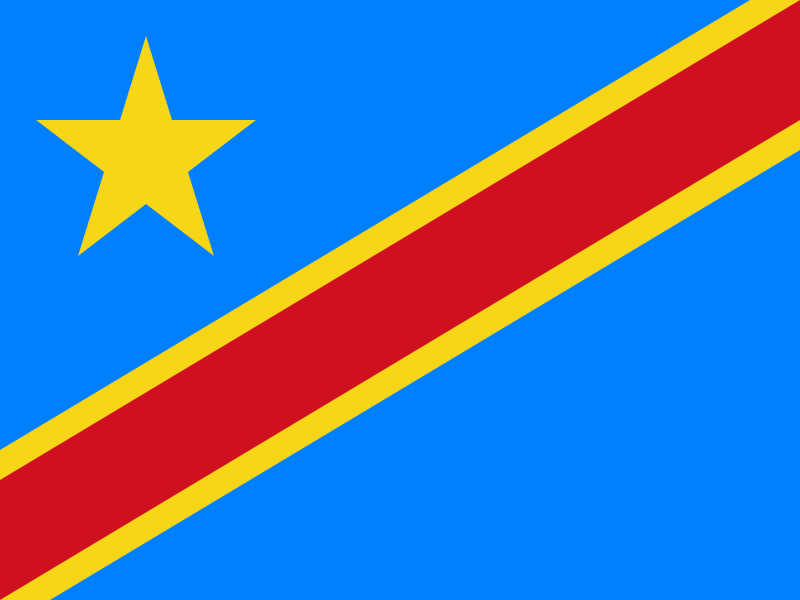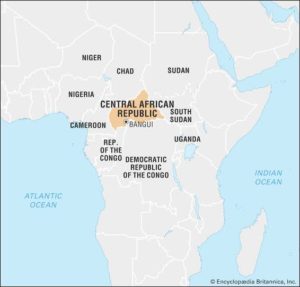
A vast country in Central Africa, often referred to as “Congo-Kinshasa” to distinguish it from its smaller neighbor, the Republic of the Congo. The DRC is the second-largest country in Africa by area and the most populous officially Francophone nation in the world. Despite its extraordinary natural wealth—including vast deposits of cobalt, copper, diamonds, and gold—decades of colonial exploitation, dictatorship, and war have left it one of the world’s least developed nations. It is also home to the second-largest rainforest on Earth and the Virunga National Park, Africa’s oldest protected area and a refuge for the critically endangered mountain gorilla.
History
The territory was home to the Kingdom of Kongo, a powerful state that flourished from the 14th century and established diplomatic relations with Portugal. In 1885, King Leopold II of Belgium claimed the region as his personal possession, the Congo Free State, and exploited it brutally for rubber and ivory; historians estimate that up to 10 million Congolese died from forced labor, starvation, and atrocities during this period. In 1908, it became the Belgian Congo, a colony administered by the Belgian government until independence on June 30, 1960.
The country’s first prime minister, Patrice Lumumba, was overthrown and assassinated in 1961 with the alleged complicity of Belgium and the United States. In 1965, Colonel Joseph-Désiré Mobutu seized power in a coup, renaming the country Zaire in 1971 and ruling for 32 years as a dictator whose regime was marked by extreme corruption and violence. Mobutu was overthrown in 1997 by Laurent-Désiré Kabila, who was assassinated in 2001 and succeeded by his son, Joseph Kabila. The First and Second Congo Wars (1996–2003) drew in armies from nine African nations and caused an estimated 5.4 million deaths, mostly from disease and famine.
Félix Tshisekedi became president in 2019, marking the country’s first peaceful transfer of power, and was re-elected in December 2023.
Culture
The DRC is home to more than 200 ethnic groups, primarily Bantu, with the Mongo, Luba, Kongo, and Mangbetu-Azande constituting the largest populations. The official language is French, though four national languages are recognized: Lingala, Swahili, Kikongo, and Tshiluba. Approximately 93% of the population is Christian, with Roman Catholics forming the largest denomination.
Congolese rumba, inscribed on UNESCO’s Intangible Cultural Heritage list, is the country’s most iconic musical export, influencing genres across Africa and beyond. Traditional arts include intricate wood carvings, copper sculptures, and masks that are considered treasures of world art. The national dish is Poulet à la Moambé, a rich chicken stew made with palm oil, peanut butter, and spices, typically served with fufu (cassava dough). Congolese women are known for wearing liputa, vibrantly colored dresses for formal occasions.
Nature
The DRC covers 2,344,858 km², making it the largest country in sub-Saharan Africa, with a coastline of only about 40 km on the Atlantic Ocean. The country is dominated by the Congo River basin, the world’s second-largest rainforest, and is bordered by nine countries. The highest point is Mount Stanley (5,109 m) in the Rwenzori range, shared with Uganda.
Virunga National Park, Africa’s first national park (created in 1925) and a UNESCO World Heritage Site since 1979, spans over 7,900 km² and harbors exceptional biodiversity, including mountain gorillas, chimpanzees, and okapis. Salonga National Park, the largest protected area of rainforest in Africa, is the last major refuge for the bonobo, an endangered great ape endemic to the DRC. The DRC is considered a megadiverse country, but poaching, deforestation, and armed conflict pose severe threats to its wildlife.
Government
The DRC is a semi-presidential republic. The President is head of state, commander-in-chief, and is directly elected for a 5-year term, renewable once. Félix Tshisekedi has been president since January 2019 and was re-elected in December 2023. The Prime Minister is the head of government; Judith Tuluka Suminwa was appointed in April 2024, becoming the first woman to hold the position.
The legislature is bicameral: the National Assembly has 500 members, and the Senate has 108 members, both elected for 5-year terms. The judiciary includes a Constitutional Court, Supreme Court, and Court of Cassation. The constitution guarantees political pluralism and prohibits any amendment to the republican form of the state, universal suffrage, or the number and duration of presidential terms. However, analysts describe the DRC as an “electoral oligarchy,” where power circulates within a narrow elite and accountability to the broader population remains weak.