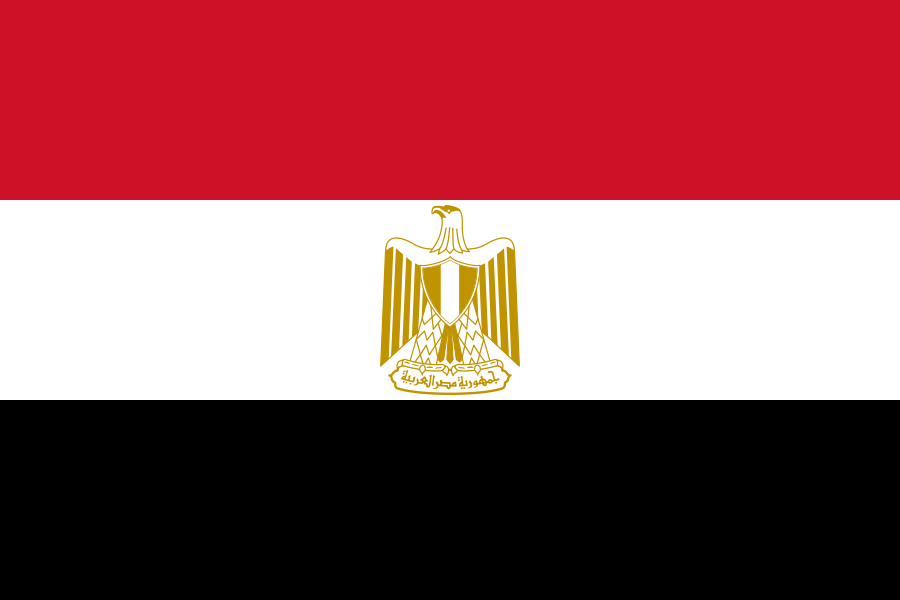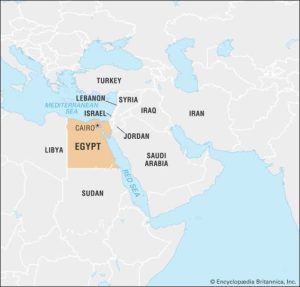
A transcontinental country occupying the northeastern corner of Africa and the Sinai Peninsula in Asia. Egypt is one of the world’s oldest civilizations, with a pharaonic history spanning more than 3,000 years. Today it is the most populous nation in the Arab world and a key geopolitical actor in the Middle East and North Africa, controlling the strategic Suez Canal, one of the most important maritime routes on the planet.
History
Egypt is considered one of the world’s four great ancient civilizations. Around 3200 BC, King Menes unified Upper and Lower Egypt, establishing the first unified state. Pharaonic civilization developed along the Nile River, passing through the Old Kingdom (the era of the great pyramids), the Middle Kingdom, and the New Kingdom, for a total of 30 dynasties. After centuries of Persian, Greek, and Roman rule, the Arabs invaded Egypt in 641 AD, initiating a process of Arabization and Islamization that would define its modern identity. In 1517, the country was conquered by the Ottoman Empire, and in 1882 it came under British occupation. Egypt gained formal independence in 1922, but it was not until the 1952 revolution, led by Gamal Abdel Nasser, that the modern republic was established. In 1971 it adopted its current name: Arab Republic of Egypt.
Culture
Egyptian society is predominantly Sunni Muslim (approximately 84% of the population), with a significant minority of Coptic Christians (around 16%). The official language is Arabic, although English and French are widely understood in tourism and business. Egyptian culture is deeply communal, with strong family ties and great respect for traditions. Egyptian music and cinema have for decades been the epicenter of the cultural industry in the Arab world, with legendary figures such as Umm Kulthum and Omar Sharif. Cuisine is based on legumes, vegetables, and bread, with standout dishes such as koshari (a mix of rice, lentils, and pasta with tomato sauce) and ful medames (cooked fava beans).
Nature
Egypt has an area of approximately 1,001,450 km² and is crossed from south to north by the Nile River, which has been the country’s backbone since antiquity. The desert covers more than 90% of its territory. The Nile empties into the Mediterranean Sea, forming an extensive delta, the country’s most fertile and densely populated region. The climate is desert and extremely dry, with summer temperatures in the south sometimes exceeding 40°C. The Sinai Peninsula, east of the Suez Canal, is a mountainous and desert region, home to Mount Catherine (2,629 m), the country’s highest peak.