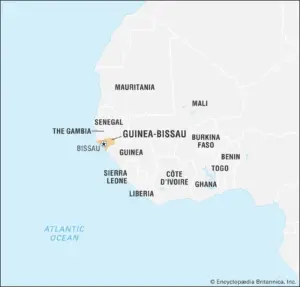
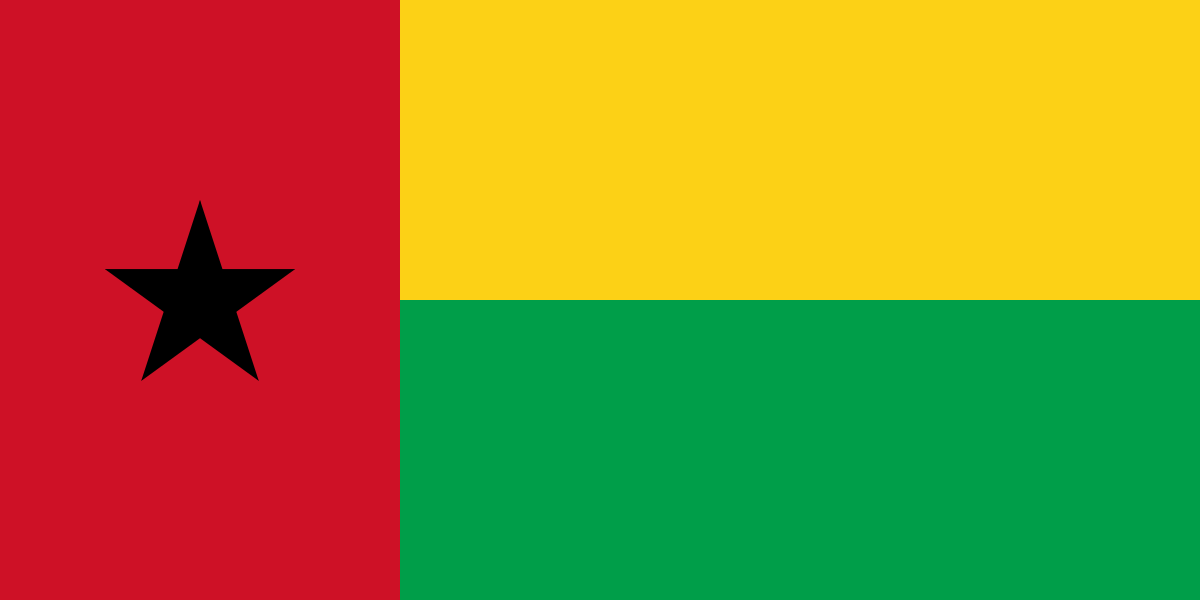
Since independence, the country has suffered multiple coups d’état. In 1980, João Bernardo “Nino” Vieira overthrew Cabral. In 1999, Vieira was deposed after a civil war. In 2009, Vieira was assassinated. In 2012, a military coup interrupted the electoral process. After a transition period, José Mário Vaz won the 2014 elections, and Umaro Sissoco Embaló was elected in 2020 .
In November 2025, a new military coup led by General Horta Inta-A Na Man overthrew the government, dissolved the institutions, and established a military junta. Inta-A assumed as transitional president . The junta organized a constitutional referendum in August 2026 that approved a new constitution concentrating power in the presidency .
Culture
Guinea-Bissau is home to 27 ethnic groups, among which the Balanta (27%), Fula (23%), and Mandinga (12%) stand out . The official languages are Portuguese and Creole (kriol), which serves as the national lingua franca. Tribal languages such as Balanta, Fula, Manjaco, and Mandinga are also spoken .
Religion is divided among Muslims (45%), Christians (22%), and followers of traditional religions (15%) . Society combines Islamic practices with animist traditions.
The creole identity, known as Kriston, played a central role in the anti-colonial struggle and in the formation of national identity . The Bissau Carnival, originally restricted to the creole elite, was transformed after independence into a national celebration that integrates all ethnic groups .
Gastronomy is characterized by intense and spicy flavors. Standout dishes include chabéu broth (with palm oil, okra, and meat or fish), mancarra broth (peanut soup), and oyster rice, as oysters are abundant in the region . Rice is the fundamental accompaniment to almost every meal.
Nature
Guinea-Bissau covers 36,125 km² and has a mostly flat relief, with altitudes barely exceeding 200 meters in the northwest . The country includes the Bijagós Archipelago, a group of 88 islands and islets that was declared a UNESCO World Heritage Site in 2025 .
The Bijagós constitute the only active deltaic archipelago on the African Atlantic coast, with tides reaching up to 7 meters in range, one of the largest in West Africa . Its mangroves and tidal flats support approximately 870,000 migratory shorebirds, making it one of the main feeding points on the East Atlantic Flyway .
Marine biodiversity is exceptional: the waters harbor manatees, dolphins, and green turtles. The island of Poilão is the most important nesting site for green turtles in West Africa . Inland, the Cantanhez forests harbor an estimated population of 1,908 western chimpanzees, a critically endangered subspecies .
However, biodiversity faces serious threats: habitat destruction from agriculture, fires, and mining, as well as poaching and illegal pet trade . The country is also vulnerable to drug trafficking, which uses its coasts and islands as a staging point to Europe .
Government
Traditionally, Guinea-Bissau was a semi-presidential republic. The 1999 Constitution established that the President was head of state, elected by universal suffrage for a 5-year term renewable once, while the Prime Minister, appointed by the majority party in parliament, was the head of government . Legislative power resided in the National People’s Assembly, unicameral, with 102 members elected every 4 years .
However, following the November 2025 coup d’état, the country is under a military transition government led by General Horta Inta-A Na Man . The junta organized a constitutional referendum on August 30, 2026, which was approved, establishing a new constitution that:
Grants the president the power to appoint and dismiss the prime minister and cabinet.Allows the president to create or abolish ministries and dissolve parliament in the event of a grave political crisis.Reduces parliament from 102 to 65 seats and electoral districts from 29 to 12 .
General elections were scheduled for December 6, 2026, but both the transitional prime minister and the National Electoral Commission have indicated that conditions do not exist to hold them on that date, creating uncertainty about the timetable for returning to constitutional order . The international community, including ECOWAS and the African Union, has expressed concern and urged inclusive dialogue to ensure a peaceful transition .