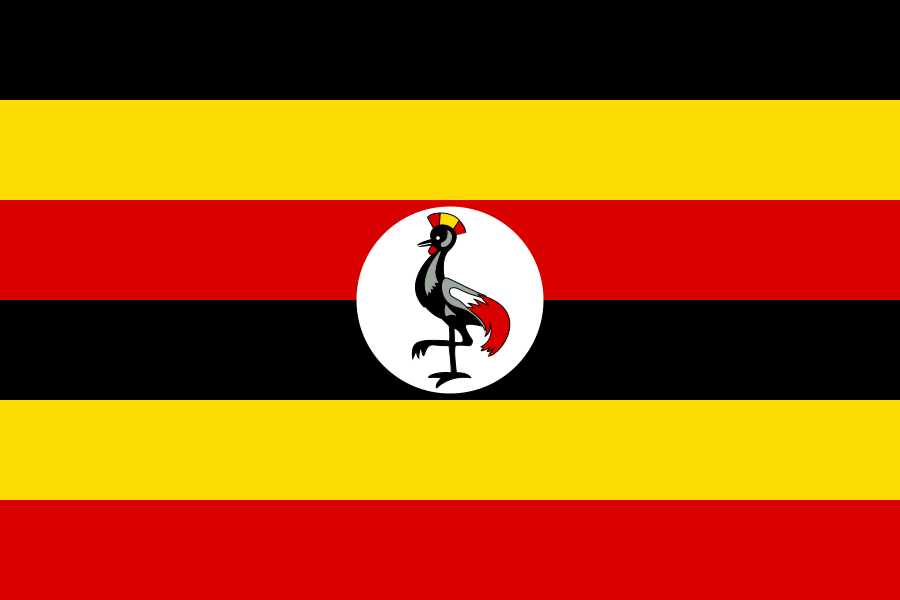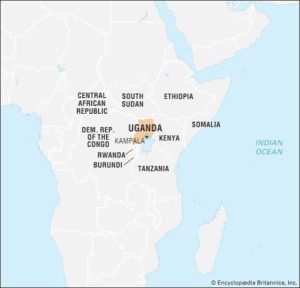
A landlocked country located in East Africa, straddling the equator. Uganda is known as the “Pearl of Africa” for its green landscapes, numerous lakes, and rich wildlife. It contains nearly half of the waters of Lake Victoria, Africa’s largest freshwater body, and is one of the world’s premier destinations for mountain gorilla trekking. Despite its natural beauty, the country has been governed by the same president, Yoweri Museveni, since 1986, and faces significant development and governance challenges.
History
The territory was home to organized kingdoms, the most powerful being the Kingdom of Buganda, which flourished in the southern region from the 14th century and became the strongest state in the area by the 19th century . In 1894, the United Kingdom declared Buganda a protectorate, and in 1896 extended its control over the entire territory of present-day Uganda . The country gained independence on October 9, 1962, with Milton Obote as its first prime minister .
Post-independence history has been marked by instability. In 1966, Obote suspended the constitution and assumed absolute power, abolishing traditional kingdoms in 1967 . In 1971, General Idi Amin seized power in a coup and established a brutal regime that lasted until 1979, when he was overthrown by Tanzanian and exiled Ugandan forces . After a period of chaos, Yoweri Museveni took power in January 1986 after a five-year guerrilla war, and has ruled ever since, being re-elected multiple times, most recently in January 2026 for a seventh term .
Culture
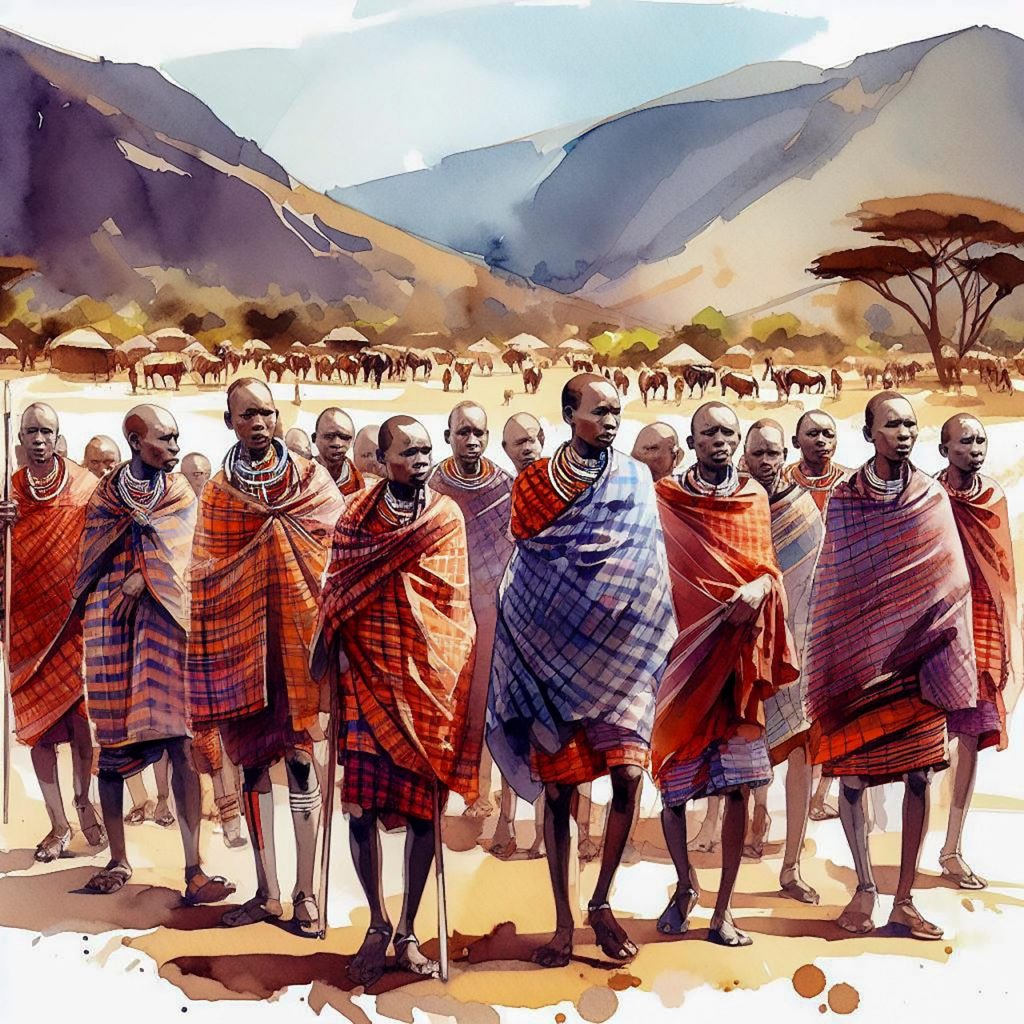
Uganda is home to approximately 65 ethnic groups, divided into four major linguistic families: the Bantu (who make up more than two-thirds of the population and include the Baganda, Banyankole, Bakiga, and Basoga), the Nilotic (such as the Langi and Acholi), the Nilotic-Semitic (such as the Iteso and Karamojong), and the Sudanic (such as the Lugbara and Madi) . The official languages are English and Swahili, although Luganda and other local languages are widely spoken .
Religion is divided mainly between Catholics (45%), Protestants (40%), and Muslims (11%) . Ugandan culture is diverse and vibrant, with musical and dance traditions that vary among ethnic groups. A notable example is runyege, a traditional performing art form of the Banyoro and Batooro people in western Uganda, which combines singing, instrument playing, dancing, and acting . Ugandan society is known for its hospitality and strong community ties.
Nature
Uganda has an area of 241,550 km², of which almost one-fifth is inland water and swamps . The country sits on a plateau with an average altitude of about 1,200 meters, with mountains on the eastern and western borders, including the Rwenzori range, where the country’s highest peak, Mount Alexandra (5,094 m), is located . The climate is tropical savanna, moderated by altitude, with average temperatures of around 22°C .
Uganda is a paradise for wildlife, with more than 350 mammal species and over 1,000 bird species . The country has 10 national parks, including Bwindi Impenetrable National Park, famous for its mountain gorillas, and Murchison Falls National Park, the country’s largest and oldest reserve, where the Nile River plunges through a gorge just 7 meters wide . Kidepo Valley National Park, in the remote northeast, is known for its spectacular scenery and hosts over 80 large mammal species and 470 bird species . A recent conservation milestone was the reintroduction of rhinos to Kidepo in March 2026, after 43 years of local absence due to poaching .
Economy
Uganda’s economy is predominantly agricultural but is undergoing transformation. According to the budget for fiscal year 2026/2027, the government projects 10.2% growth, driven by the start of commercial oil production (expected in late 2026), infrastructure investment, and agricultural and industrial expansion . The national budget amounts to 84.4 trillion Ugandan shillings .
The agricultural sector remains crucial, with significant allocations for agro-industrialization and rural development programs such as the Parish Development Model (PDM), which seeks to transform households from subsistence to commercial production . Exports of goods and services reached **$18.04 billion** in the year ending March 2026, with **coffee** standing out at $2.46 billion . However, public debt is significant, standing at $34.86 billion, approximately 53% of GDP, although the government considers it sustainable .
Government
Uganda is a presidential republic. The 1995 Constitution establishes three branches of government: the executive (President, Vice President, Prime Minister, and Cabinet), the legislative (Parliament), and the judicial (Magistrates’ Courts, High Court, Court of Appeal, and Supreme Court) . The President is head of state, head of government, and commander-in-chief of the armed forces, elected for a five-year term . Yoweri Museveni has held the presidency since 1986 .
The Vice President is Jessica Rose Epel Alupo, and the Prime Minister is Robinah Nabbanja, the first woman to hold the office . Parliament is unicameral. The 1995 Constitution was amended in 2005 to allow a multi-party political system . The country is administratively divided into 135 districts and the capital city, Kampala, grouped into four administrative regions . The voting age is 18.