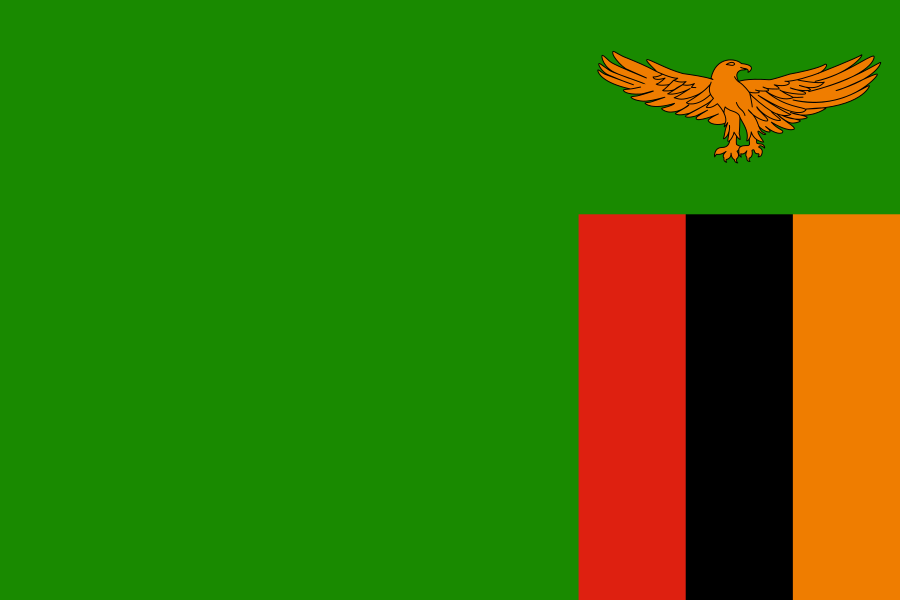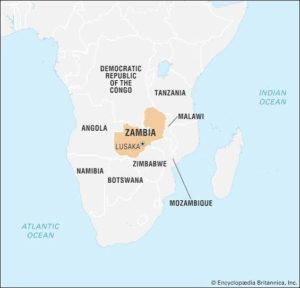
A landlocked country in south-central Africa, known for its vast mineral resources, particularly copper, and for sharing one of the world’s natural wonders: Victoria Falls. Zambia is a nation of great ethnic diversity and scenic beauty, which has experienced significant economic growth in recent years, though it still faces challenges such as high public debt and rural poverty.
History
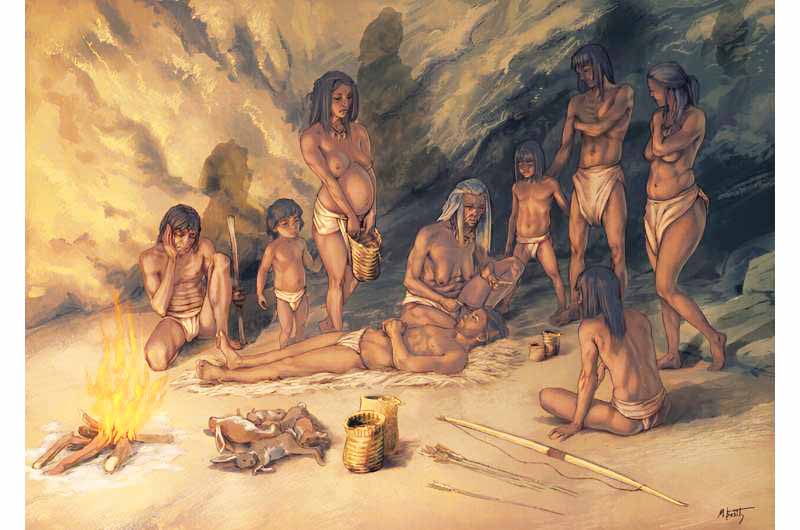
The territory was originally inhabited by Khoisan hunter-gatherer peoples, displaced about two thousand years ago by Bantu migrations . Between the 17th and 19th centuries, new groups arrived, including the Luba and Lunda from present-day Congo and Angola, and the Nguni from the south . In the late 19th century, the area came under the control of Cecil Rhodes’s British South Africa Company, and in 1911 the protectorate of Northern Rhodesia was created .
In 1953, the United Kingdom attempted to unite Northern Rhodesia with Southern Rhodesia (now Zimbabwe) and Nyasaland (now Malawi), but the interests of white settlers in Zimbabwe led to the federation’s dissolution. Northern Rhodesia separated and became the new state of Zambia on October 24, 1964, with Kenneth Kaunda as its first president . Kaunda ruled until 1991, when he was succeeded by Frederick Chiluba after the first multi-party elections. Since then, Zambia has maintained relative democratic stability, with peaceful transfers of power. The current president is Hakainde Hichilema, who took office in August 2021 .
Culture
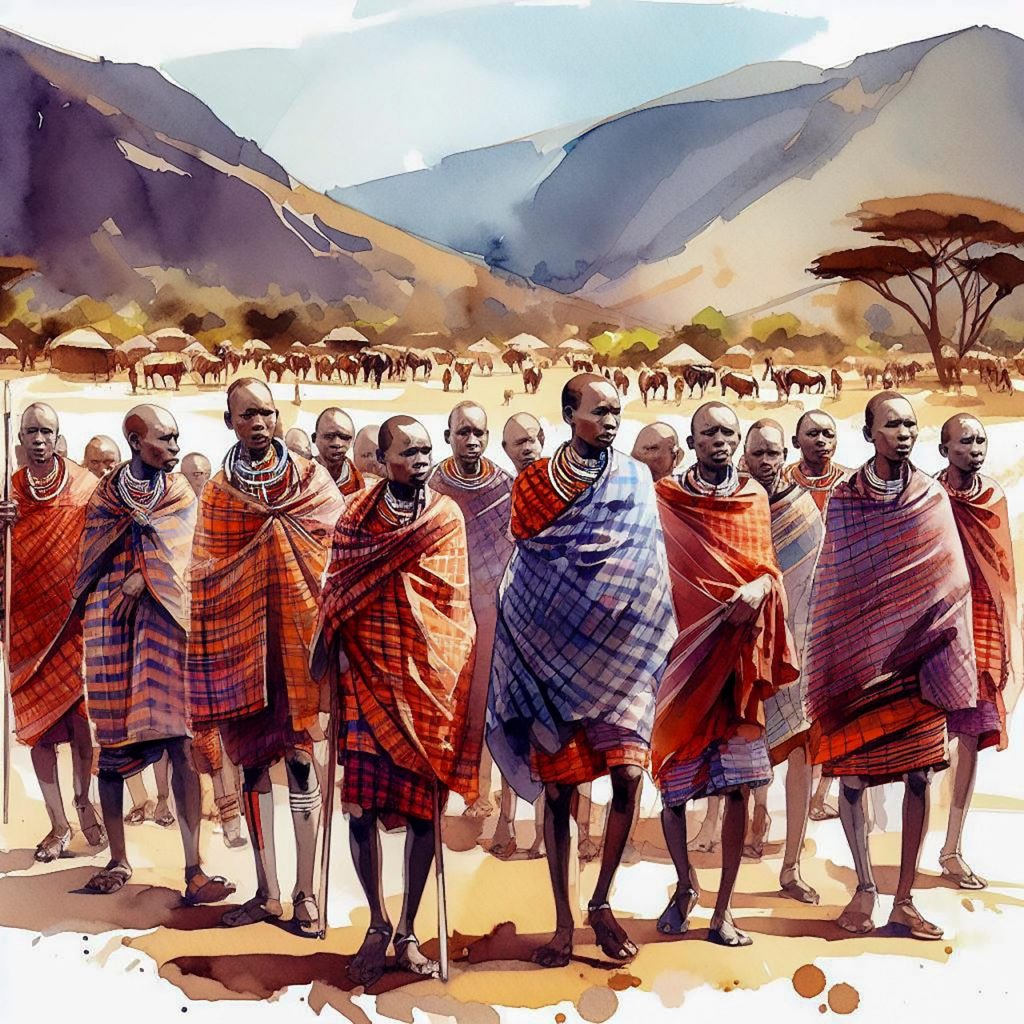
Zambia is home to approximately 73 ethnic groups, most of them Bantu-speaking . The main groups include the Bemba (21%), Tonga (13.6%), Chewa (7.4%), Lozi (5.7%), and Nsenga (5.3%) . English is the official language and is used in administration and education, while 72 local languages are spoken, notably Bemba, Nyanja, Tonga, and Lozi .
The predominant religion is Christianity (approximately 95%, with a Protestant majority and 20% Catholic), and Zambia is officially a Christian nation according to its 1996 constitution . Traditional culture is rich in ceremonies and festivals, such as the Kuomboka of the Lozi in Western Province, which celebrates the king’s move to higher ground during the flood season, and the Ncwala of the Ngoni in the east, a thanksgiving ceremony for the first harvest .
Cuisine is based on maize, consumed mainly as nshima, a thick porridge of maize meal accompanied by vegetables, beans, meat, or fish . A curious fact is the existence of Zamrock, a psychedelic rock genre that emerged in the 1970s with bands like The Witch and Amanaz, who fused rock with traditional Zambian rhythms .
Nature
Zambia covers 752,612 km² and borders eight countries, with no access to the sea . The landscape is mainly an elevated plateau, with the highest point in the Muchinga Mountains (2,200 m) in the east . The climate is tropical, moderated by altitude, with a rainy season from October to April .
The country is famous for Victoria Falls (Mosi-oa-Tunya, “the smoke that thunders”), on the Zambezi River, shared with Zimbabwe, considered one of the Seven Natural Wonders of the World. Zambia also hosts abundant wildlife in national parks such as South Luangwa National Park, known for its walking safaris and large elephant herds, and Kafue National Park, the country’s largest. Natural resources include copper, cobalt, zinc, lead, coal, emeralds, gold, and hydropower . Zambia is a relatively well-watered country, with navigable rivers such as the upper Zambezi and the Chambeshi, and lakes such as Tanganyika and Kariba .
Economy
Zambia is a lower-middle-income economy, heavily dependent on copper mining, which accounts for the bulk of its exports . The country is Africa’s second-largest copper producer and aims to increase output toward 1 million tonnes in 2025 and 3 million by 2031 . Agriculture employs around 80% of the population, although it contributes only about 8% of GDP; main crops include maize, cassava, sugarcane, and soybeans . Tourism is a growing sector, attracted by Victoria Falls and safaris.
The IMF projects real GDP growth of 5.6% for 2026, driven by agriculture, mining, and copper exports . Inflation stood at 6.1% in September 2026, within the Bank of Zambia’s target range, and international reserves reached $6.1 billion** . However, the country faces fiscal pressures due to weak tax collection and high public debt service, much of which is held by China . Zambia reached a staff-level agreement with the IMF in 2026 for a new **$1.47 billion financing program over 36 months, aimed at supporting economic reforms and debt sustainability .
Government
Zambia is a presidential republic. The President is head of state, head of government, and commander-in-chief of the armed forces, elected by universal suffrage for a five-year term, renewable once. The current president is Hakainde Hichilema, in office since August 2021 . The Vice President is Mutale Nalumango .
Legislative power resides in a unicameral National Assembly of 167 members elected for five-year terms . The judiciary is independent and includes a Supreme Court, the High Court, and magistrate’s courts. The country is administratively divided into 10 provinces and 89 districts . The voting age is 18