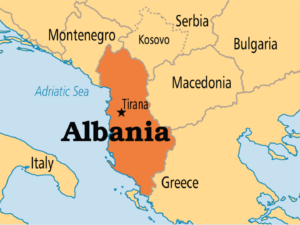
Albania is located in Southeastern Europe on the Balkan Peninsula, with coasts along the Adriatic and Ionian Seas. It borders Montenegro to the northwest, Kosovo to the northeast, North Macedonia to the east, and Greece to the south. Its landscape features rugged mountain ranges in the north and fertile plains and valleys along the coast.
People & Culture
The vast majority of the population is made up of ethnic Albanians, descendants of the ancient Illyrian tribes. The official language is Albanian (shqip), a unique Indo-European language with no close living relatives. A central pillar of its society is Besa, a traditional code of honor based on hospitality and unconditional protection for guests and visitors. The country is known for the peaceful coexistence among its Muslim, Orthodox, and Catholic communities. Coffee is at the heart of social life, and its cuisine includes traditional dishes like tavë kosi (baked lamb with rice and yogurt sauce) and byrek (savory pastry).
Nature
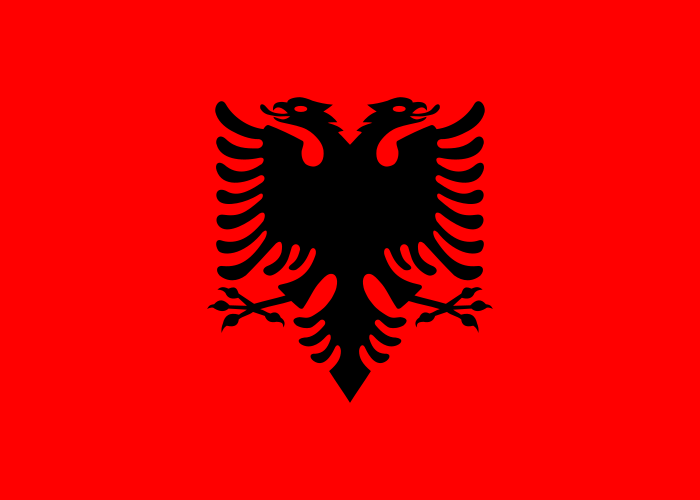
The natural environment spans from the peaks of the Albanian Alps to the beaches of the Albanian Riviera. Its forests and mountains are home to species such as the brown bear, gray wolf, and the endangered Balkan lynx, as well as the golden eagle, the national symbol. It features the Vjosa River, one of Europe’s last wild, undammed rivers, and shares Lake Ohrid, one of the continent’s oldest and deepest lakes.
Government
Albania is a parliamentary constitutional republic. The Prime Minister serves as the head of government and holds executive power, while the President acts as the head of state with ceremonial duties. Albania has been a full member of NATO since 2009 and is an official candidate for accession to the European Union.
History
Inhabited since antiquity by Illyrian tribes, the region later became part of the Roman and Byzantine Empires. In the 15th century, national hero Skanderbeg led a two-decade resistance against the invading Ottoman Empire, under whose rule the country remained until declaring independence in 1912.
Following World War II, Albania fell under the isolationist communist dictatorship of Enver Hoxha, who ruled from 1944 until his death in 1985. During this period, the regime built more than 170,000 concrete bunkers across the country out of fear of foreign invasion. In 1991, after the collapse of the communist regime, the nation began its transition toward democracy and a market economy