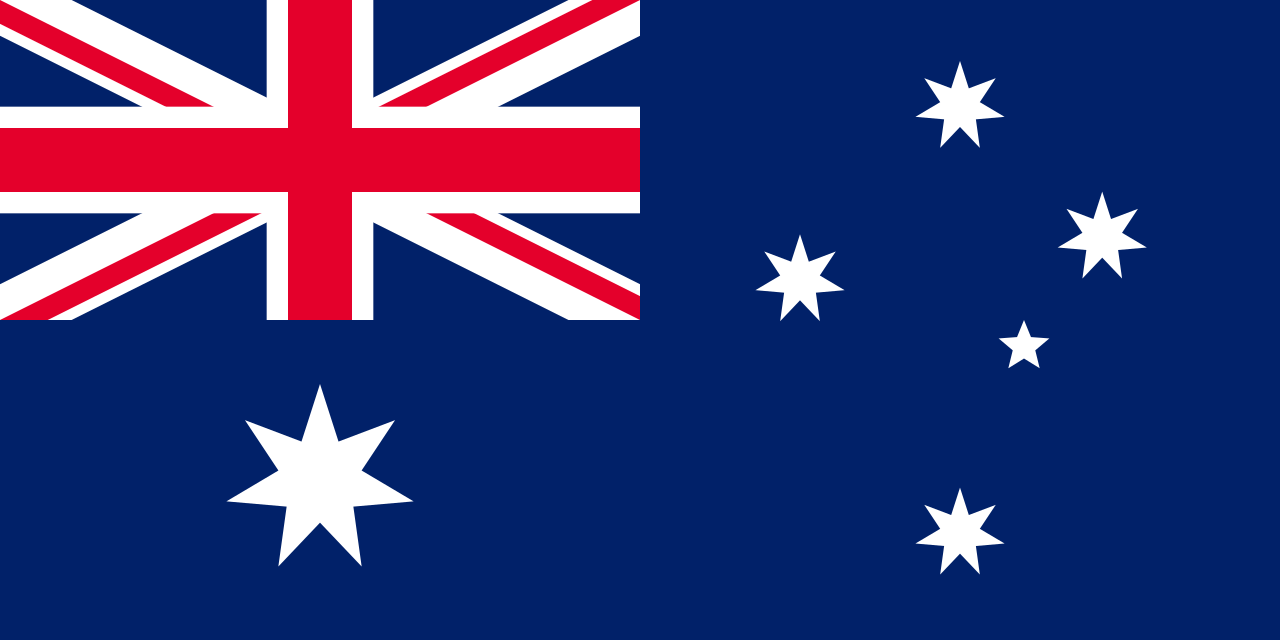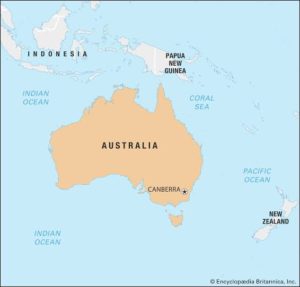
Australia is located in the Southern Hemisphere, comprising the mainland of the Australian continent, the island of Tasmania, and numerous smaller islands. It is bounded by the Indian Ocean to the west and south, and the Pacific Ocean to the east. It is the sixth-largest country in the world by total area and the only nation to govern an entire continent. Its geography is defined by a low-lying interior dominated by vast deserts known as the Outback, framed by fertile coastal plains, the Great Dividing Range along the eastern coast, and extensive tropical rainforests in the north.
People & Culture
The population is predominantly urban and concentrated along the eastern and southeastern coasts. Australia is a multicultural society built on waves of global migration, alongside the rich traditions of First Nations peoples—Aboriginal and Torres Strait Islander Australians—who have inhabited the continent for over 65,000 years. English is the national language, spoken with a distinct Australian accent and vocabulary. Indigenous culture is expressed through art, storytelling, and deep spiritual connections to the land, such as the concept of Country. Australian culture reflects a strong outdoor lifestyle, passion for sports like Australian rules football, cricket, and rugby, and a thriving coffee and food culture. Popular traditional foods include Vegemite spread, meat pies, and fresh seafood.
Nature
Australia experiences a wide range of climate zones, from tropical conditions in the far north to arid desert in the center and temperate climates in the south. Due to tens of millions of years of geographic isolation, over 80 percent of Australia’s plants and animals are endemic to the continent. Iconic fauna includes marsupials like kangaroos, koalas, wombats, and wallabies, as well as monotremes like the platypus and echidna. Australia is home to major natural wonders, including the Great Barrier Reef—the world’s largest coral reef system, located off the coast of Queensland—and Uluru, a massive sandstone monolith in the Red Centre sacred to indigenous Pitjantjatjara Anangu people.
Government
Australia is a federal parliamentary constitutional monarchy and a representative democracy. The British monarch is recognized as the head of state and is represented locally by the Governor-General. Executive authority is led by the Prime Minister, who serves as head of government and leads the majority political party in parliament. Legislative power is vested in a bicameral Federal Parliament, consisting of the Senate and the House of Representatives. The nation is administratively structured into six states and two major internal territories.
History
First Nations peoples settled the Australian continent tens of thousands of years before European arrival, developing complex societies and deep environmental stewardship. Dutch navigators explored parts of the coastline in the 17th century, but permanent European settlement began in 1788 when Great Britain established the Penal Colony of New South Wales at Sydney Cove. Throughout the 19th century, British colonies were established across the continent in an era marked by the gold rushes of the 1850s, rapid economic development, and devastating impacts on Indigenous populations through displacement, disease, and conflict. On January 1, 1901, the six self-governing British colonies federated to form the Commonwealth of Australia as a dominion within the British Empire. In the post-World War II period, Australia dismantled its restrictive White Australia immigration policies, opening the doors to large-scale international immigration that transformed it into a diverse, modern multicultural nation with a highly developed economy.